Kaomoji Japanese Emoticons & Text Faces
The best kaomoji keyboard & copy-paste tool for iPhone & iPad
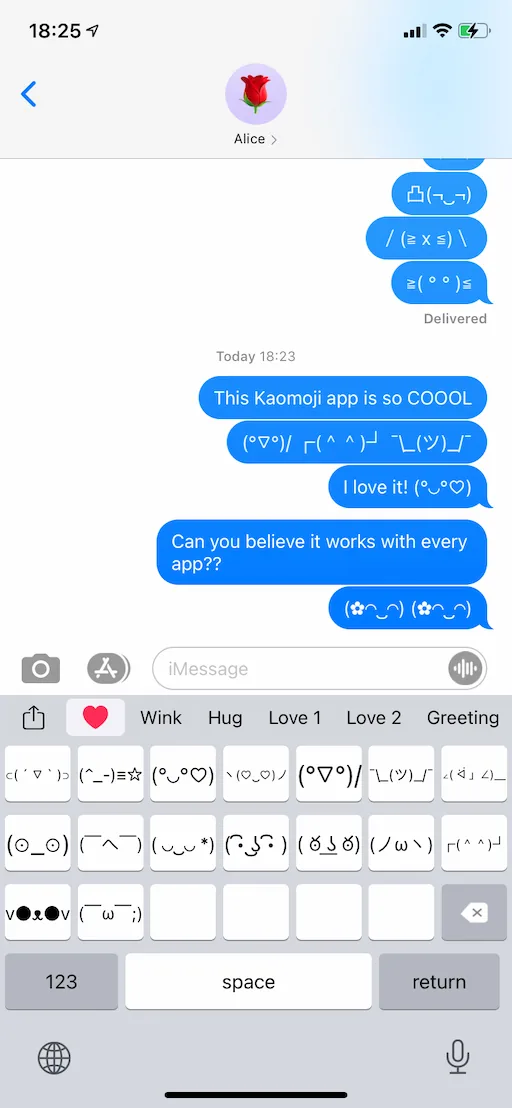
A kaomoji (顔文字, literally "face character") is a Japanese style of emoticon built from text characters and symbols. Unlike Western emoticons like :-) that need to be read sideways, kaomoji are designed to be read upright — making them more intuitive and expressive. Born in Japan in the 1980s, kaomoji combine punctuation, letters, and characters from Japanese, Korean, and Cyrillic scripts to create faces, animals, and figures that pop with personality.
Where emoji are bitmap pictures defined by Unicode (like 😊), kaomoji are pure text — which means they work everywhere: messages, social media bios, usernames, code comments, even URLs. Iconic faces like (◕‿◕), ¯\_(ツ)_/¯, and ʕ•ᴥ•ʔ have become global text-art classics — instantly recognizable across cultures and platforms.
Whether you want to share joy with happy kaomoji, vent frustration with a (╯°□°)╯︵ ┻━┻, or melt hearts with a cute bear ʕ•ᴥ•ʔ, our collection of 1000+ Japanese emoticons has the perfect text face for every mood.
A kaomoji is a Japanese emoticon built from text characters that you read upright — like (◕‿◕) or ʕ•ᴥ•ʔ. The word kaomoji (顔文字) literally means "face character" in Japanese, and unlike Western emoticons such as :-), kaomoji are designed to be read without tilting your head.
The easiest way is to install the Kaomoji keyboard for iPhone and iPad, which adds a dedicated kaomoji keyboard that works in any app — Messages, Notes, Mail, social media, anywhere. You can also browse and copy kaomoji directly from our copy-paste tool.
No. Emoji are bitmap pictures defined by Unicode (like 😊), while kaomoji are pure text characters arranged into faces (like (◕‿◕) or ¯\_(ツ)_/¯). Because kaomoji are just text, they work everywhere text works — including usernames, code comments, URLs, and platforms that don't render emoji.
Kaomoji originated in Japan in the 1980s on early bulletin board systems (BBS). They were created so that emotions could be conveyed in text-only communication without tilting your head to read them — a more natural fit for Japanese text. Over the following decades, kaomoji spread worldwide and became a global text-art tradition.
Use our Kaomoji Copy & Paste tool: browse 1000+ kaomoji organized by category (happy, love, animals, and more), then click any face to copy it to your clipboard with one tap. Paste it anywhere — chats, captions, emails, code comments, or anywhere else text goes.